

Core Concepts
〰️
Unit of Treatment
〰️
View of Pathology
〰️
Therapist Role
〰️
Treatment Goals
〰️
Memory Stories & Visual Recall Tools
〰️
Core Concepts 〰️ Unit of Treatment 〰️ View of Pathology 〰️ Therapist Role 〰️ Treatment Goals 〰️ Memory Stories & Visual Recall Tools 〰️
Finally, a study guide designed for the way many therapists actually learn.
If you've ever stared at a theory chart, highlighted an entire textbook chapter, or reread the same paragraph three times only to realize none of it stuck, you're not alone.
Most LMFT exam study materials are built around memorization. The challenge is that therapy theories were never meant to be learned as disconnected lists of concepts. They were developed by real people with unique perspectives about human behavior, relationships, growth, and change. When theories are reduced to flashcards and bullet points, they become harder to remember and even harder to apply.
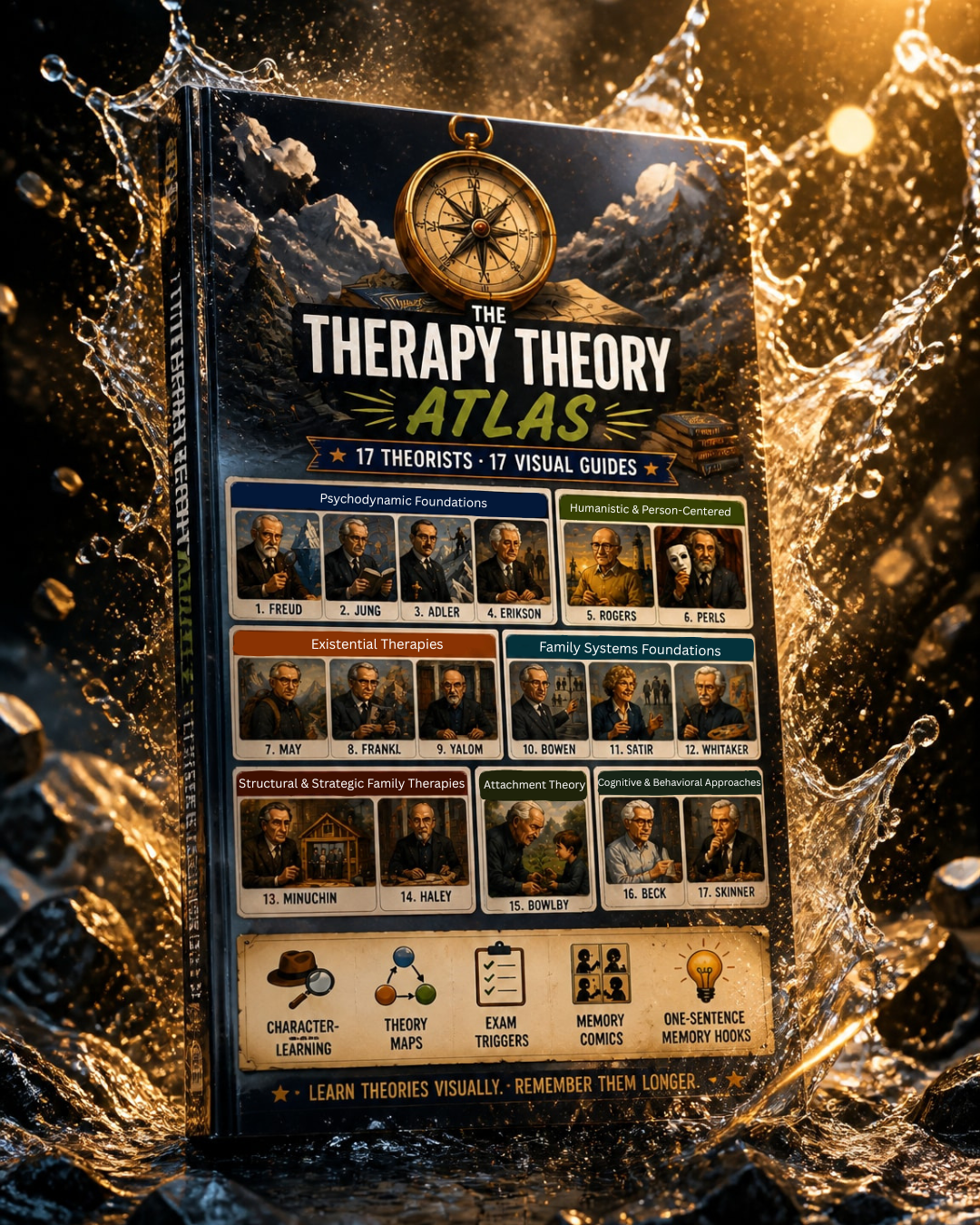
The LMFT Exam Theory Atlas was created to solve that problem.
Instead of presenting theorists as pages of dense text, the Atlas transforms each theory into a visual world that helps concepts become memorable, meaningful, and easier to retrieve under exam pressure.
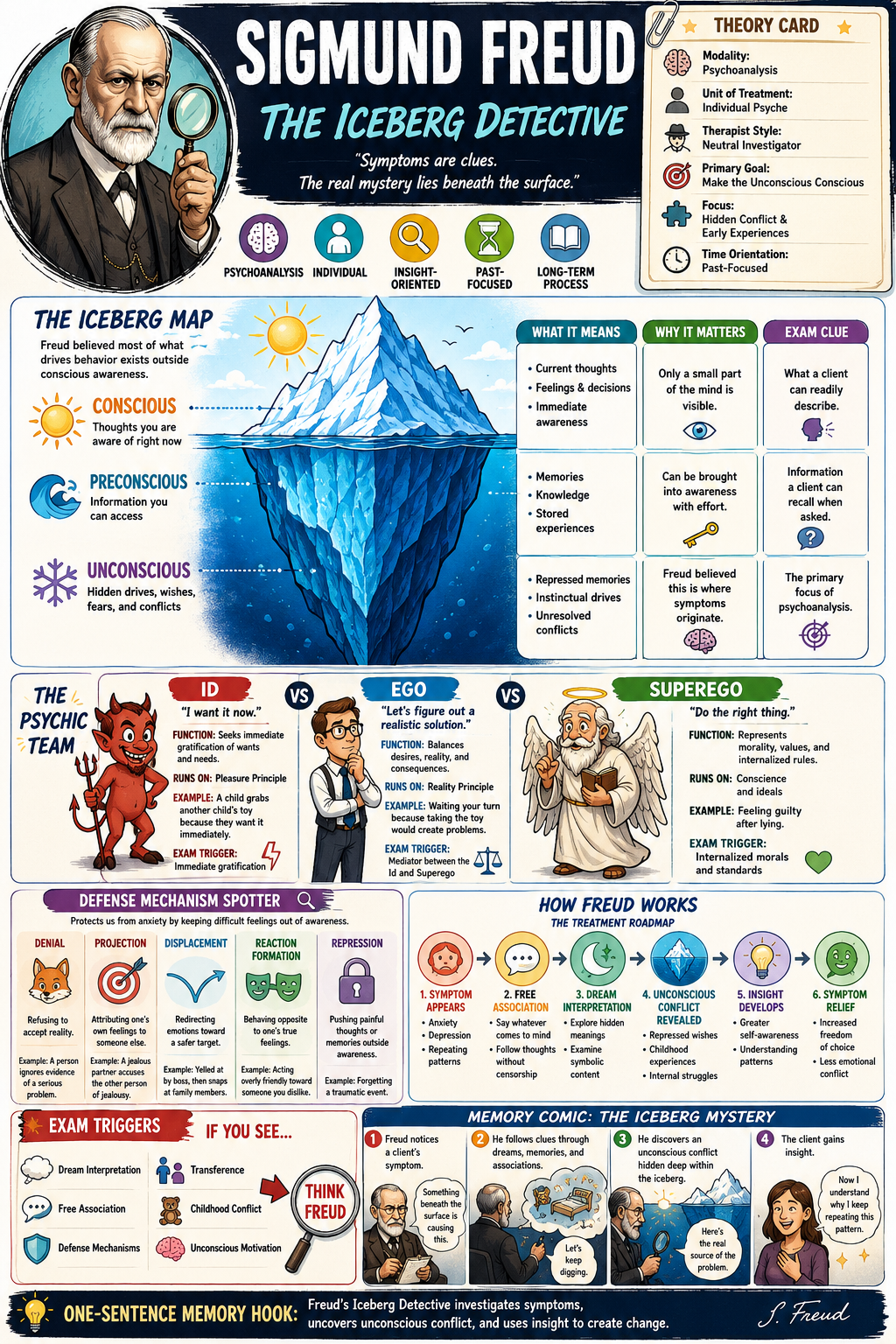
Freud becomes the Iceberg Detective, helping you visualize the conscious and unconscious mind.
Bowen becomes the Family Scientist, making differentiation, triangles, and multigenerational patterns easier to understand.
Minuchin becomes the Family Architect, allowing structure, boundaries, hierarchy, and subsystems to come to life.
Each theorist is represented through a unique character, visual metaphor, color palette, and memory system designed to strengthen retention and make abstract concepts easier to understand.
LMFT/LCSW Therapy Theory Atlas

“I have always struggled to memorize small details in large amounts. Having something visual to attach each concept to helped me pass my LMFT exam the first time!”
-Brandy W.